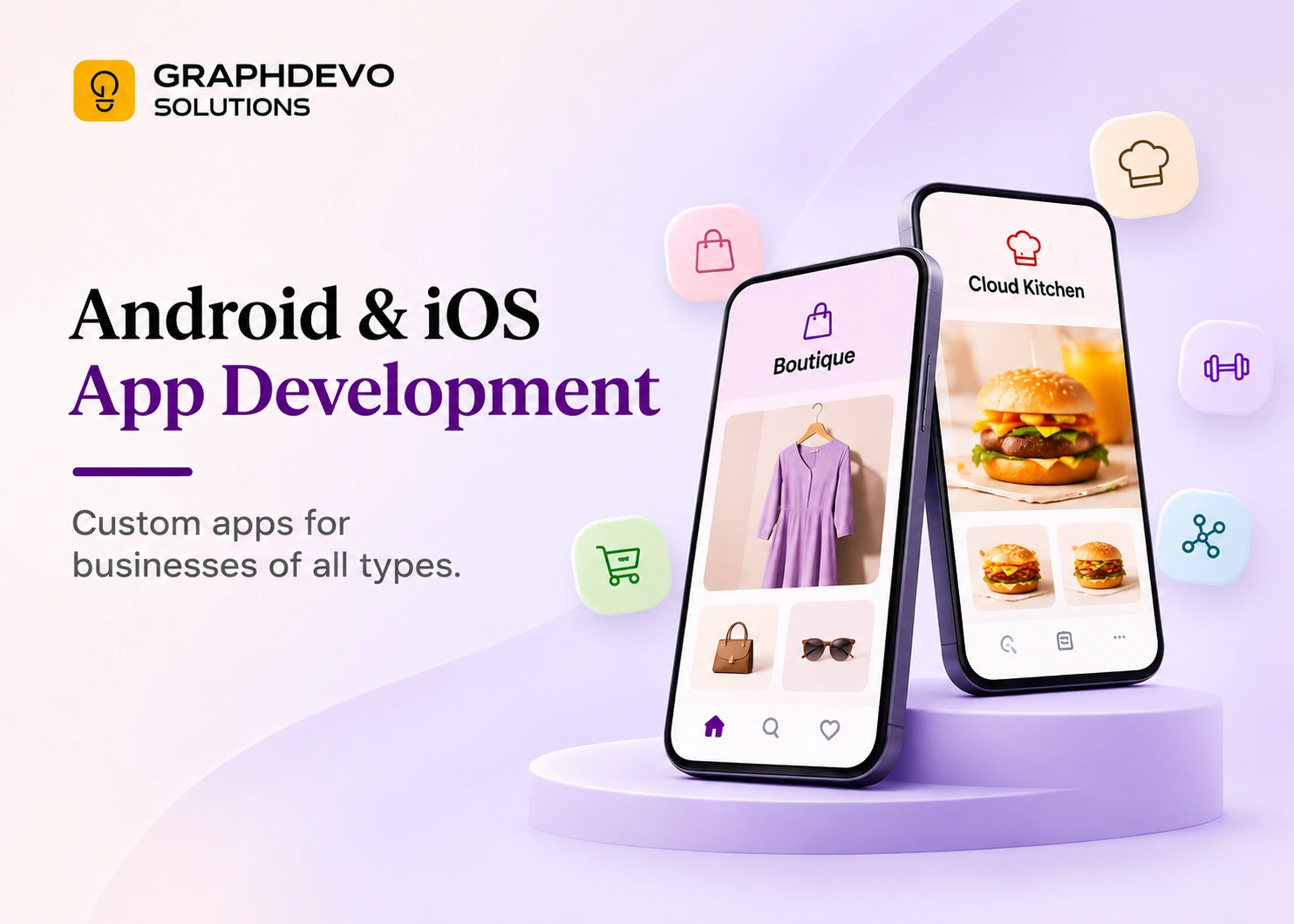
Custom Android & iOS App Development for Boutiques, Cloud Kitchens and Other Businesses
The way businesses connect with customers is changing rapidly. From ordering food and shopping for clothes to booking appointments and managing fitness memberships, customers increasingly expect convenient digital experiences through their smartphones.
For businesses such as boutiques, cloud kitchens, bakeries, supermarkets, gyms, salons, and retail stores, having a dedicated mobile application can create new opportunities to improve customer engagement and simplify daily operations.
However, building a successful business application is not just about creating an attractive interface. It requires understanding business workflows, customer expectations, and the features that make everyday interactions easier.
This is where Android and iOS app development becomes valuable.
A custom mobile application can help businesses connect with customers, manage services, accept orders, process payments, and build stronger digital relationships.
Let's explore how custom mobile app development can support different industries and what businesses should consider before building an application.
Why Do Businesses Need a Mobile Application?
Customers are already using smartphones for many everyday activities. Businesses that offer convenient mobile experiences can make it easier for customers to discover products, access services, and complete transactions.
A business mobile application can help companies:
- Improve customer engagement: Create a direct digital channel to interact with customers.
- Simplify daily operations: Bring important business activities into one platform.
- Increase convenience: Allow customers to access products and services through their smartphones.
- Improve customer retention: Use loyalty programs, personalized offers, and notifications.
- Support digital payments: Make transactions easier through integrated payment options.
- Build brand visibility: Create a dedicated digital presence for the business.
The right application should solve actual business problems rather than simply replicate the features of a website.
How Custom Mobile App Development Supports Different Industries
Every business operates differently. A boutique has different requirements from a cloud kitchen, while a gym needs a completely different set of customer and operational features.
This is why a one-size-fits-all application may not work for every business.
Let's look at how mobile applications can support different industries.
1. Boutique App Development
Fashion boutiques need to showcase their collections, manage product availability, and make shopping convenient for customers.
A dedicated boutique application can bring the entire shopping experience into one platform.
Essential features include:
- Product catalogues with high-quality images
- Categories for different clothing collections
- Size and colour selection
- Wishlist functionality
- Shopping cart and checkout
- Secure online payments
- Order tracking
- Offers and promotional notifications
For example, customers can browse new arrivals, select their preferred size, add products to their wishlist, and complete purchases directly through the application.
For boutique owners, an admin dashboard can help manage products, inventory, customer orders, and promotions.
A well-designed boutique mobile app can create a convenient shopping experience while helping fashion businesses build stronger customer relationships.
2. Cloud Kitchen App Development
Cloud kitchens operate primarily through online food orders and delivery services. Managing incoming orders, menus, payments, and customer communication efficiently is essential.
A custom cloud kitchen application can help connect customers with the kitchen through a streamlined ordering experience.
Essential features include:
- Digital food menu
- Food categories and product descriptions
- Customization options
- Add-to-cart functionality
- Online payment integration
- Order status updates
- Delivery tracking
- Offers and discount coupons
Customers can explore the menu, customize their meals, place orders, and receive updates without depending entirely on phone calls.
On the business side, order management features can help kitchen teams organize incoming orders and monitor preparation status.
A dedicated cloud kitchen mobile app can support a smoother ordering journey and help food businesses manage their digital operations.
3. Bakery and Cake Shop App Development
Bakeries and cake shops often receive orders for birthdays, anniversaries, weddings, and other special occasions.
A mobile application can make it easier for customers to explore products and place customized orders.
Essential features include:
- Cake and pastry catalogues
- Flavour and size selection
- Custom cake design requests
- Personalized cake messages
- Scheduled delivery and pickup
- Online payments
- Order history
- Festive collections and offers
For example, a customer ordering a birthday cake can choose the flavour, weight, design, and delivery date through the application.
The bakery can manage incoming orders through a centralized dashboard.
This creates a more organized ordering experience for both customers and bakery teams.
4. Supermarket and Grocery App Development
Supermarkets and grocery retailers need to manage a large number of products, inventory updates, and frequent customer orders.
A dedicated grocery application can help customers shop conveniently without visiting the physical store.
Essential features include:
- Product categories
- Search and filters
- Product availability
- Shopping cart
- Multiple payment options
- Delivery slot selection
- Order tracking
- Repeat ordering
Customers can browse grocery items, add products to their cart, choose delivery options, and complete purchases from their smartphones.
For supermarket businesses, inventory management and order processing features can help simplify daily operations.
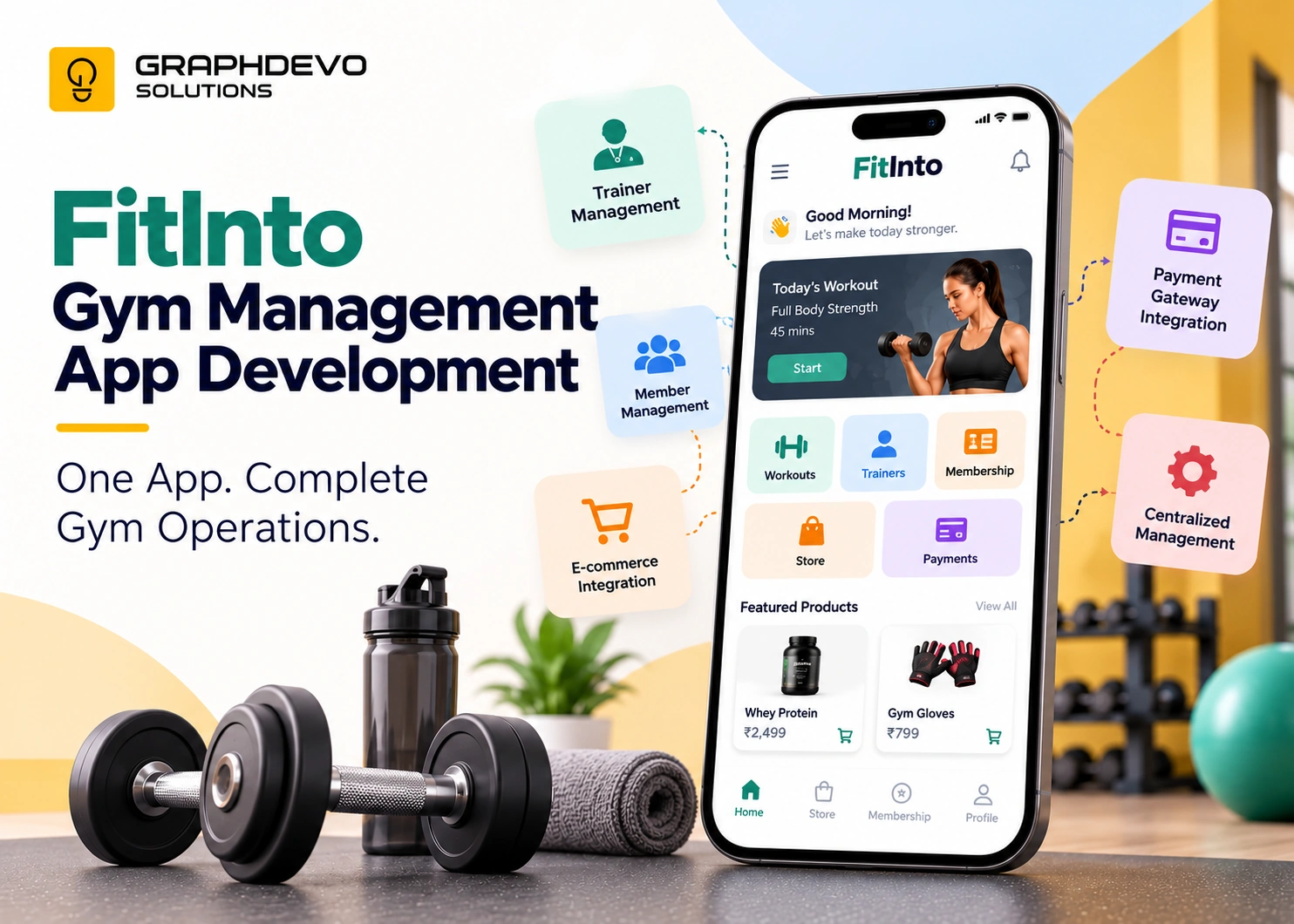
5. Gym and Fitness App Development
Fitness businesses need to manage members, trainers, memberships, and customer engagement.
A gym application can bring important fitness services into one digital platform.
Essential features include:
- Member registration
- Membership management
- Trainer profiles
- Workout schedules
- Class booking
- Membership payment integration
- Notifications and reminders
- Progress tracking
Members can access relevant fitness information, while gym administrators can manage memberships and other operational activities.
A custom fitness application can also support additional services such as fitness product sales and online training programs.
6. Salon and Beauty App Development
Salons and beauty businesses depend on appointments, service availability, and customer relationships.
A mobile application can make appointment booking easier while helping businesses organize their schedules.
Essential features include:
- Service catalogues
- Stylist and professional profiles
- Appointment booking
- Available time slots
- Online payments
- Appointment reminders
- Customer profiles
- Loyalty programs
Customers can explore available services, select their preferred professional, and book appointments without calling the salon.
For salon owners, an admin dashboard can help manage appointments, staff availability, and customer information.
7. Retail Business App Development
Retail businesses often need to manage product discovery, customer orders, payments, and promotional campaigns.
A custom retail application can support both online and offline business operations.
Essential features include:
- Product catalogues
- Product search and filtering
- Customer accounts
- Wishlist and shopping cart
- Secure checkout
- Order tracking
- Promotional campaigns
- Loyalty and rewards programs
Depending on the business model, the application can also support store pickup, delivery, and integration with existing inventory systems.
Essential Features Every Business Mobile App Should Consider
Although different industries require different functionality, some features are important across most business applications.
1. User Registration and Profile Management
Provide a simple registration and login experience. Customers should be able to manage their personal details, contact information, saved addresses, and preferences.
2. Intuitive Navigation and User Experience
Customers should be able to find products, services, and important information without confusion.
A well-planned UI/UX design should focus on clear navigation, readable content, accessible interactions, and simple user journeys.
3. Secure Payment Gateway Integration
Digital payments can make purchasing products and services more convenient.
Depending on the business and target market, applications may support UPI, cards, net banking, digital wallets, or other payment methods.
4. Push Notifications
Notifications can help businesses share important updates, including:
- Order confirmations
- Delivery updates
- Appointment reminders
- New product announcements
- Special offers
- Membership updates
Notifications should be relevant and useful rather than overwhelming customers.
5. Admin Dashboard
A centralized admin dashboard allows businesses to manage important application activities.
Common capabilities include product management, customer information, order processing, service management, payments, and reports.
6. Analytics and Reporting
Analytics can help business owners understand customer activity and application performance.
Useful insights may include popular products, order volumes, repeat purchases, sales trends, and customer engagement.
Android vs. iOS App Development: Which Should Your Business Choose?
One of the important decisions during mobile app development is choosing the platforms on which the application should be available.
Android App Development
Android applications help businesses reach customers using a wide range of Android smartphones and devices.
Android development may be suitable for businesses targeting diverse customer segments and device categories.
iOS App Development
iOS applications allow businesses to create experiences for customers using Apple devices.
Businesses targeting iPhone users may consider a dedicated iOS application to provide a platform-specific experience.
Cross-Platform App Development
If your business wants to launch on both Android and iOS, cross-platform development may be worth considering.
Technologies such as Flutter and React Native can support applications across multiple platforms using a shared codebase.
The right approach depends on the application's complexity, performance requirements, available budget, integrations, and long-term maintenance plans.
Custom App Development vs. Ready-Made Applications
Businesses often have to decide between using an existing application platform and investing in custom mobile app development.
Ready-made solutions can be useful when business requirements are straightforward and standard features are sufficient.
However, businesses with specific workflows or unique requirements may benefit from custom development.
| Ready-made applicationCustom mobile application | |
| Standard functionality | Business-specific features |
| Limited customization | Greater flexibility |
| Platform-dependent workflows | Tailored business workflows |
| Predefined integrations | Custom integration possibilities |
| May have feature limitations | Can evolve with business needs |
A custom application allows businesses to plan functionality around their operations, customer journeys, and future growth.
What Is the Mobile App Development Process?
Building a mobile application requires a structured development process.
At GraphDevo Solutions, a typical project approach can be organized into the following stages:
1. Requirement Analysis
Understand the business model, target audience, operational challenges, and application goals.
2. Feature Planning
Identify essential features, define the project scope, and prioritize functionality for the first release.
3. UI/UX Design
Create user journeys, wireframes, and interface designs that make the application easy to use.
4. App Development
Build the required Android and iOS application functionality, backend services, and integrations.
5. Testing and Quality Assurance
Test the application across relevant devices and scenarios to identify usability, performance, and functional issues.
6. Deployment and Maintenance
Prepare the application for release and provide ongoing improvements, updates, and maintenance based on business requirements.
A well-planned process helps reduce development risks and creates a stronger foundation for future enhancements.
Why Choose GraphDevo Solutions for Custom Mobile App Development?
Every business has unique goals, customers, and operational requirements. Building an application that reflects these needs requires more than technical implementation.
At GraphDevo Solutions, we focus on developing digital products that connect business requirements with practical user experiences.
Our mobile app development capabilities can support businesses across industries, including:
- Boutique and fashion businesses
- Cloud kitchens and food businesses
- Bakeries and cake shops
- Supermarkets and grocery retailers
- Gyms and fitness businesses
- Salons and beauty services
- General retail businesses
From requirement planning and UI/UX design to application development and deployment, the focus is on building solutions that address real business needs.
Explore our custom mobile app development services to understand how a dedicated application can support your business goals.
Related Articles You May Like
More insights and deep dives matching this topic area.
How Much Does It Cost to Build a Mobile App in 2026? Complete Guide
How to Build a Mobile App on a Budget: A Cost-Effective Guide for Startups