
Garments E-commerce Website and Mobile App Development: Essential Features to Grow Your Fashion Business
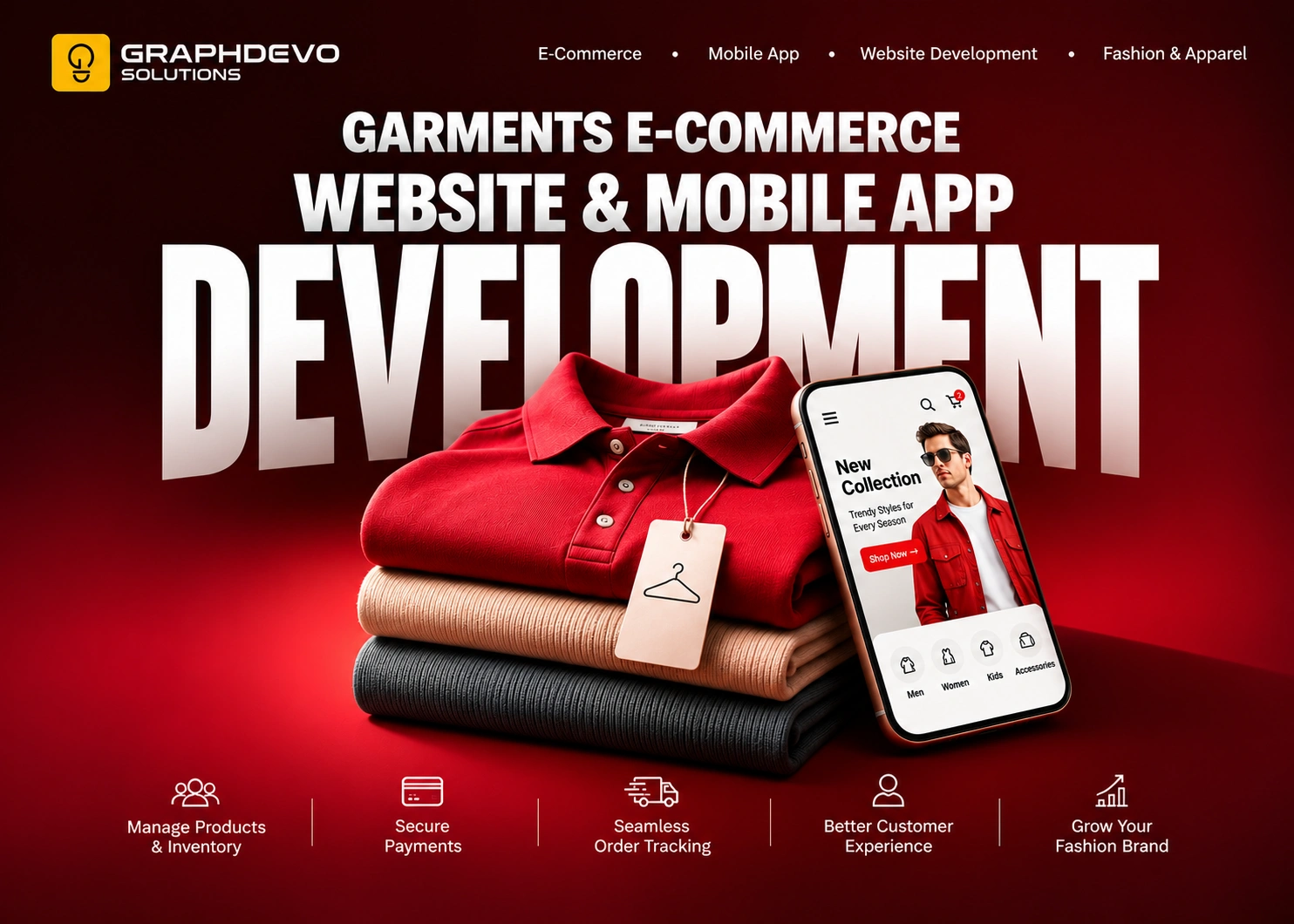
The fashion industry has changed significantly with the growth of online shopping. Today, customers expect to discover clothing, compare products, check sizes, make secure payments, and track orders—all from their mobile devices or computers.
For garment manufacturers, clothing retailers, fashion startups, and apparel brands, having a strong digital presence is no longer just an advantage. A well-designed garments e-commerce website and mobile app can help businesses reach more customers, create better shopping experiences, and build long-term brand growth.
But what does it take to build a successful online fashion platform?
This blog explores the essential features and product considerations behind garments website development, clothing app development, and modern fashion e-commerce development.
Why Fashion Businesses Need a Website and Mobile App
A physical store has geographical limitations. An e-commerce platform allows fashion businesses to showcase their products to customers beyond their local market.
A website and mobile app can help businesses:
- Reach a wider audience
- Display a complete product catalog
- Create a consistent brand experience
- Enable customers to shop anytime
- Simplify order and payment management
- Build stronger relationships with customers
While a website is often the first step toward digital commerce, a mobile app can create a more personalized and convenient experience for returning customers.
Together, they can form a connected digital ecosystem for a growing fashion business.
Essential Features for a Garments E-commerce Website and Mobile App
1. Easy Product Discovery and Search
Fashion customers often know what they are looking for—or want to explore before making a decision.
A good search experience should help users quickly find products based on relevant categories and preferences.
Useful search and discovery features include:
- Category-based navigation
- Search functionality
- Filters for size, color, price, and brand
- Product sorting options
- Featured and trending collections
For example, a customer looking for a black formal shirt should be able to filter products by category, color, size, and price instead of scrolling through hundreds of products.
A simple product discovery experience can reduce the time it takes for customers to find what they want.
2. Detailed Product Pages
Unlike a physical store, online shoppers cannot touch or try on a product before purchasing it. This makes product information especially important.
A well-designed product page should include:
- High-quality product images
- Multiple product views
- Size and fit information
- Available colors and variants
- Product descriptions
- Pricing details
- Customer reviews
Clear and accurate product information helps customers make confident purchasing decisions. For fashion businesses, features such as size guides and fit details can also help reduce confusion and improve the overall shopping experience.
3. Smart Size and Variant Selection
One of the biggest challenges in online fashion shopping is choosing the right size. A confusing size selection process can lead to abandoned carts or product returns.
An effective clothing app development strategy should make it easy for customers to:
- Select available sizes
- View size guides
- Choose colors and product variants
- See stock availability for each option
The interface should clearly communicate which options are available and which are currently out of stock.
4. Wishlist and Personalized Shopping
Customers may discover products they like but decide not to purchase them immediately. A wishlist feature allows users to save products and return to them later.
Personalization can further improve the shopping experience through:
- Recently viewed products
- Recommended items
- Similar product suggestions
- Personalized collections
These features can help customers continue their shopping journey without having to search for the same products again.
5. A Simple and Secure Checkout Experience
A complicated checkout process can result in customers leaving without completing their purchase.
The ideal checkout journey should be simple:
Add to Cart → Review Order → Enter Delivery Details → Choose Payment → Confirm Order
Important checkout features include:
- Guest checkout options
- Saved addresses
- Multiple payment methods
- Clear order summaries
- Transparent delivery charges
- Secure payment processing
Customers should know exactly what they are paying before completing the order.
6. Secure Payment Integration
Digital payments are an essential part of every e-commerce platform. A fashion website or mobile app should support convenient and secure payment options based on the needs of its target customers.
Depending on the business and market, options may include:
- Credit and debit cards
- Digital wallets
- UPI and other local payment methods
- Cash on delivery, where applicable
A reliable payment experience builds trust and helps customers complete purchases with confidence.
7. Order Tracking and Delivery Updates
The customer journey does not end after payment. Customers want to know what happens after placing an order.
A strong order management experience can provide updates such as:
- Order confirmed
- Order packed
- Order shipped
- Out for delivery
- Delivered
Real-time or timely delivery updates can reduce customer uncertainty and minimize support requests.
8. Returns and Exchange Management
Returns and exchanges are an important part of fashion e-commerce. A customer may need a different size, color, or product.
A clear return and exchange experience should provide:
- Easy access to return requests
- Clear eligibility information
- Exchange options
- Return status tracking
- Transparent refund information
Making this process easier can improve customer trust, even when a product does not meet their expectations.
9. Customer Accounts and Profile Management
A customer account can make repeat purchases faster and more convenient.
Key account features may include:
- Personal profile management
- Saved addresses
- Order history
- Wishlist
- Saved payment preferences
- Return and exchange history
For businesses, customer accounts can also support better personalization and long-term customer relationships.
10. Admin Dashboard for Business Management
Behind every successful fashion e-commerce platform is an efficient management system.
An admin dashboard can help businesses manage:
- Products and inventory
- Categories and collections
- Customer orders
- Payments
- Discounts and promotions
- Returns and exchanges
For garment manufacturers and retailers with a large product catalog, centralized management can significantly reduce manual work.
Website vs. Mobile App: Why Your Fashion Business May Need Both
A website and mobile app serve different but complementary purposes.
E-commerce Website
A website helps fashion businesses:
- Reach new customers through search engines
- Showcase products without requiring an app download
- Support customers across desktop and mobile browsers
- Build online visibility
Mobile App
A mobile app can create a more personalized experience for returning customers through:
- Faster access to products
- Saved preferences
- Personalized recommendations
- Push notifications
- A convenient shopping experience
The right approach depends on the business model, customer behavior, and stage of growth.
For some businesses, starting with a scalable mobile-friendly website may be the right first step. A dedicated app can be introduced as the customer base and digital requirements grow.
The Importance of Inventory Management
Fashion businesses often manage multiple products, sizes, colors, and seasonal collections.
Without accurate inventory information, customers may purchase products that are no longer available.
An effective inventory system should help businesses manage:
- Product stock levels
- Size-wise availability
- Color variants
- Low-stock notifications
- Product availability
Connecting inventory information with the website and mobile app can help provide customers with more accurate information while reducing operational issues.
Turning Customer Needs Into Product Requirements
Successful fashion e-commerce development starts with understanding both customer and business needs.
For example:
Customer problem: Users struggle to find products in a large catalog.
Product requirement: Provide search, category navigation, and advanced filtering.
Customer problem: Customers are unsure which size to select.
Product requirement: Include clear size guides and variant availability.
Business problem: Inventory is difficult to manage across multiple products.
Product requirement: Build a centralized inventory management system.
Customer problem: Users want to know when their order will arrive.
Product requirement: Provide order tracking and delivery notifications.
This approach helps businesses build features that solve real problems instead of adding functionality without a clear purpose.
Building a Scalable Fashion E-commerce Platform
A fashion business may start with a small collection and gradually expand into new categories, markets, or sales channels.
This is why scalability should be considered during garments website development and mobile app planning.
A scalable platform should be able to support:
- A growing product catalog
- Increased customer traffic
- Additional payment methods
- New delivery integrations
- Promotional campaigns
- Future mobile app features
A well-planned technology foundation can make future growth easier without requiring a complete rebuild.
Related Articles You May Like
More insights and deep dives matching this topic area.