
How iOS App Development Can Boost E-commerce Sales and Customer Retention
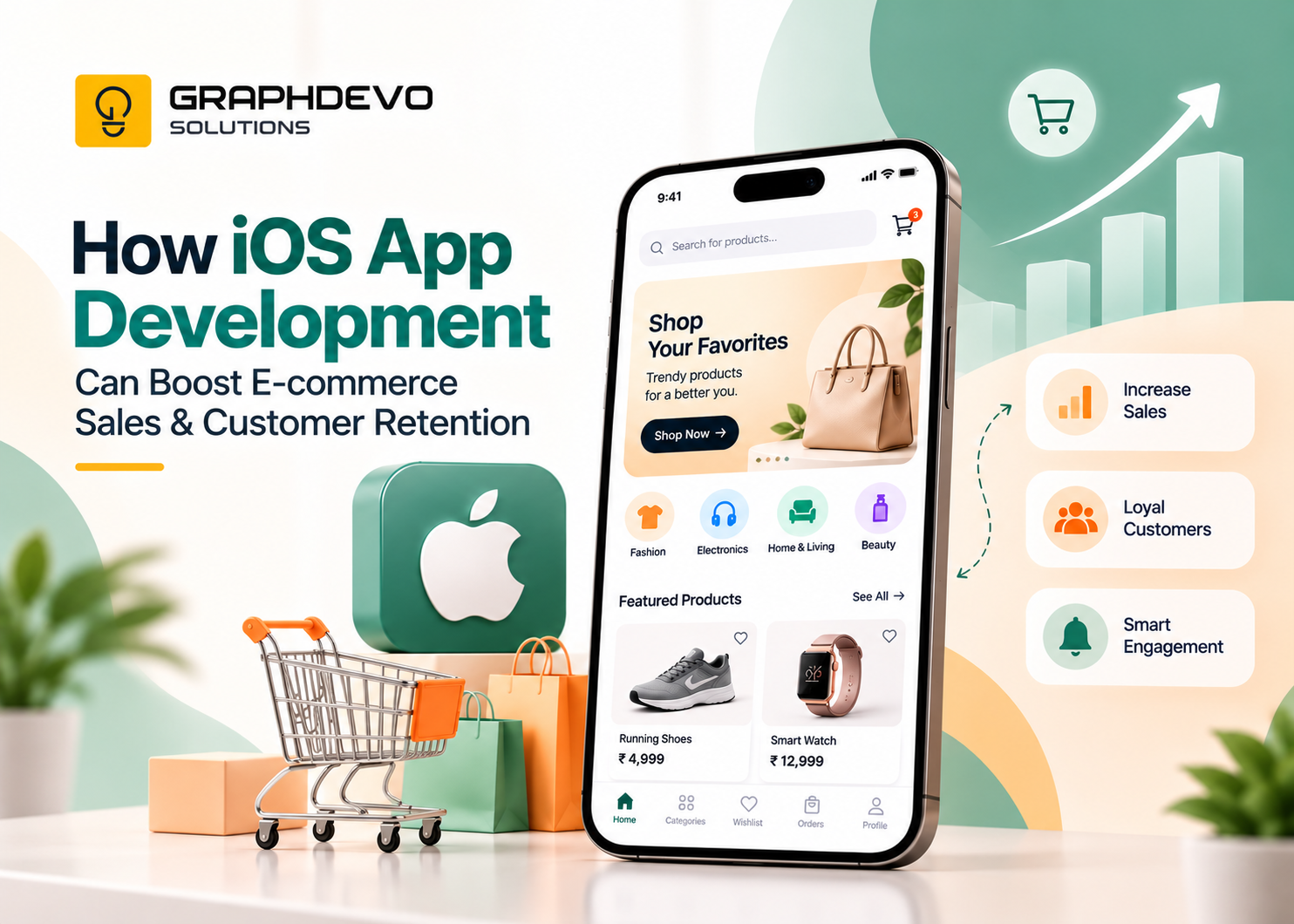
Online shopping has changed how customers discover products, compare prices, and make purchases. While e-commerce websites remain essential, a well-designed mobile app can give customers a more convenient and personalized way to shop.
For businesses targeting iPhone users, iOS app development creates an opportunity to simplify the buying journey, encourage repeat purchases, and build stronger customer relationships.
An effective iOS shopping app is more than a digital storefront. It can bring product discovery, secure checkout, order tracking, loyalty rewards, and personalized communication together in one convenient experience.
So, how can iOS app development help e-commerce businesses increase sales and retain customers? Let's explore the key benefits and features.
1. Create a Faster and More Convenient Shopping Experience
Convenience is one of the main reasons customers choose to shop online. If an app is difficult to navigate, slow to load, or complicated to use, customers may leave before completing their purchases.
A well-developed iOS e-commerce app can provide a smooth shopping journey through:
- Simple navigation and organized product categories
- Fast product search and relevant filters
- High-quality product images and detailed descriptions
- Saved addresses and preferred payment methods
- A streamlined checkout process
- Easy access to previous orders
For example, a customer who regularly purchases skincare products should be able to find their preferred items, review product details, and reorder without repeating the entire shopping process.
Business impact: Reducing unnecessary steps makes shopping more convenient and can help reduce friction that leads to abandoned carts.
2. Improve Conversion Rates With a Seamless Checkout
Getting customers to add products to their carts is only part of the challenge. Businesses must also make it easy for them to complete their purchases.
Baymard Institute's checkout research highlights how usability problems during checkout can contribute to purchase abandonment. Its research identifies opportunities to improve checkout experiences across mobile websites and apps.
An iOS shopping app can address common checkout problems by offering:
- Guest checkout for first-time customers
- Clear product prices, shipping fees, taxes, and discounts
- A visible order summary before payment
- Secure payment options appropriate for the business
- Helpful validation messages when users make mistakes
- Clear confirmation after an order is placed
Apple Pay may be suitable for physical goods and services where supported. Businesses selling digital content or subscriptions must also follow Apple's applicable in-app purchase rules.
The goal is to help customers complete their orders confidently without unnecessary form fields or unexpected costs.
Business impact: A clearer, simpler checkout can improve purchase completion and make customers more comfortable returning to the app.
3. Personalize Product Recommendations and Offers
Customers are more likely to engage with a shopping experience that reflects their interests and needs.
An iOS e-commerce app can use appropriate first-party data, browsing behavior, purchase history, and stated preferences to personalize the experience—with suitable consent and privacy controls.
Personalization opportunities include:
- Recommended products based on previous purchases
- Recently viewed items
- Relevant category suggestions
- Offers based on customer preferences
- Complementary products and accessories
- Personalized product collections
For example, if a customer frequently purchases running shoes, the app could highlight running accessories, suitable new arrivals, or relevant loyalty offers.
Recommendations should remain useful rather than overwhelming. Businesses should explain data use clearly, respect user preferences, and avoid treating every interaction as an opportunity to sell.
Business impact: Relevant recommendations can help customers discover suitable products, increase cross-selling opportunities, and encourage repeat visits.
4. Encourage Repeat Purchases With Push Notifications
A mobile app gives businesses another channel for communicating with customers after they leave the store.
With permission, push notifications can remind customers about useful updates, relevant offers, and activities connected to their shopping journey.
Examples include:
- Order confirmation and delivery updates
- Back-in-stock alerts for saved products
- Price-drop notifications for wish-listed items
- Reminders about abandoned carts
- Loyalty point updates and reward availability
- Replenishment reminders for regularly purchased products
However, notifications should be timely, relevant, and easy to control. Sending too many promotional messages can frustrate customers and lead them to disable notifications or uninstall the app.
Businesses should measure notification performance through meaningful outcomes, such as completed purchases and repeat orders, rather than relying only on open rates.
Business impact: Thoughtful notifications can bring interested customers back to the app and support repeat purchases.
5. Build Customer Loyalty With Rewards and Memberships
Discounts may encourage customers to make their first purchase, but long-term retention requires consistent value.
An iOS app can make loyalty programs easier to access and use by keeping rewards, purchase history, and membership benefits in one place.
Useful loyalty features include:
- Points earned on eligible purchases
- Membership tiers and benefits
- Exclusive member offers
- Reward redemption during checkout
- Referral programs
- Personalized milestones and incentives
For example, a fashion retailer could offer members early access to new collections, while a grocery brand could reward customers for frequent purchases.
The important part is making the program easy to understand. Customers should know how to earn points, what rewards are available, and when their benefits expire.
Business impact: A well-designed loyalty experience can give customers additional reasons to choose the same brand for future purchases.
6. Use App Analytics to Understand Customer Behavior
An e-commerce app creates opportunities to understand where customers engage, hesitate, and leave the buying journey.
With appropriate privacy safeguards, analytics can help businesses identify friction and prioritize improvements.
Important metrics to monitor include:
- Product view-to-cart conversion rate
- Cart abandonment rate
- Checkout completion rate
- Average order value
- Repeat purchase rate
- Customer retention rate
- App crashes and performance issues
- Uninstall rate and notification opt-outs
For example, if analytics show that many customers leave after viewing shipping costs, the business can test showing delivery estimates and charges earlier in the journey.
Teams can also run controlled experiments on product page layouts, search filters, checkout steps, and promotional placements.
Analytics should guide decisions, not replace customer research. Combining quantitative data with customer feedback and usability testing helps teams understand both what is happening and why.
Business impact: Continuous improvement helps businesses remove barriers, prioritize useful features, and make more informed product decisions.
7. Improve Performance, Security, and Reliability
Customers expect shopping apps to work smoothly. Slow screens, failed payments, confusing errors, or unreliable order updates can damage trust.
A quality iOS development process should prioritize:
- Efficient app loading and responsive interactions
- Reliable API integration
- Secure authentication and session management
- Appropriate protection of personal and payment-related data
- Clear error messages and recovery options
- Reliable order and inventory synchronization
- Accessibility and compatibility across supported devices
- Ongoing testing, monitoring, and maintenance
Security should be built into the product from the beginning. Businesses should minimize the personal data they collect, use trusted payment providers, and follow relevant privacy and security requirements.
Accessibility matters, too. Readable text, clear contrast, accessible controls, and support for assistive technologies help more customers use the app successfully.
Business impact: A reliable and accessible app supports customer confidence and reduces the frustration that can prevent future purchases.
8. Make Reordering and Post-Purchase Support Easier
The shopping experience does not end when a customer pays. Delivery updates, returns, refunds, and customer support all influence whether that person shops with the brand again.
An iOS app can improve the post-purchase journey through:
- Real-time order status where supported
- Delivery tracking
- Easy access to invoices and order history
- Clear return and refund policies
- Self-service cancellation or return requests where eligible
- In-app customer support
- One-tap reordering for suitable products
For example, a customer who frequently buys household essentials could use their order history to replenish products quickly. Another customer could check the status of a return without contacting support.
Businesses should make policies clear and provide realistic delivery estimates rather than promising features or timelines they cannot reliably deliver.
Business impact: Better post-purchase support can reduce customer effort, strengthen trust, and make repeat purchases more likely.
9. Why Choose Custom iOS App Development for E-commerce?
Ready-made platforms can be a good starting point for many businesses. However, companies with specific workflows, integrations, or customer experience requirements may benefit from a custom iOS application.
A custom solution can be designed around the business's needs, including:
- Integration with existing e-commerce platforms
- Inventory and order management systems
- Customer relationship management tools
- Custom loyalty and membership programs
- Tailored product discovery and checkout flows
- Business-specific reporting and analytics
The right approach depends on the target audience, business model, budget, technical requirements, and expected return on investment.
Before development begins, businesses should define the main customer problem, identify the essential features for the first release, and decide how success will be measured.
A focused initial release can help validate demand before investing in more advanced features.
How GraphDevo Solutions Can Help
Building an effective e-commerce app requires more than technical implementation. It involves understanding customer behavior, business objectives, user experience, and the systems that support online sales.
GraphDevo Solutions helps businesses explore digital product development opportunities, from user-friendly experiences to tailored web and mobile solutions.
If you're planning to expand your e-commerce business with a mobile app, explore our services and solutions and portfolio to learn more about our work.
Related Articles You May Like
More insights and deep dives matching this topic area.